
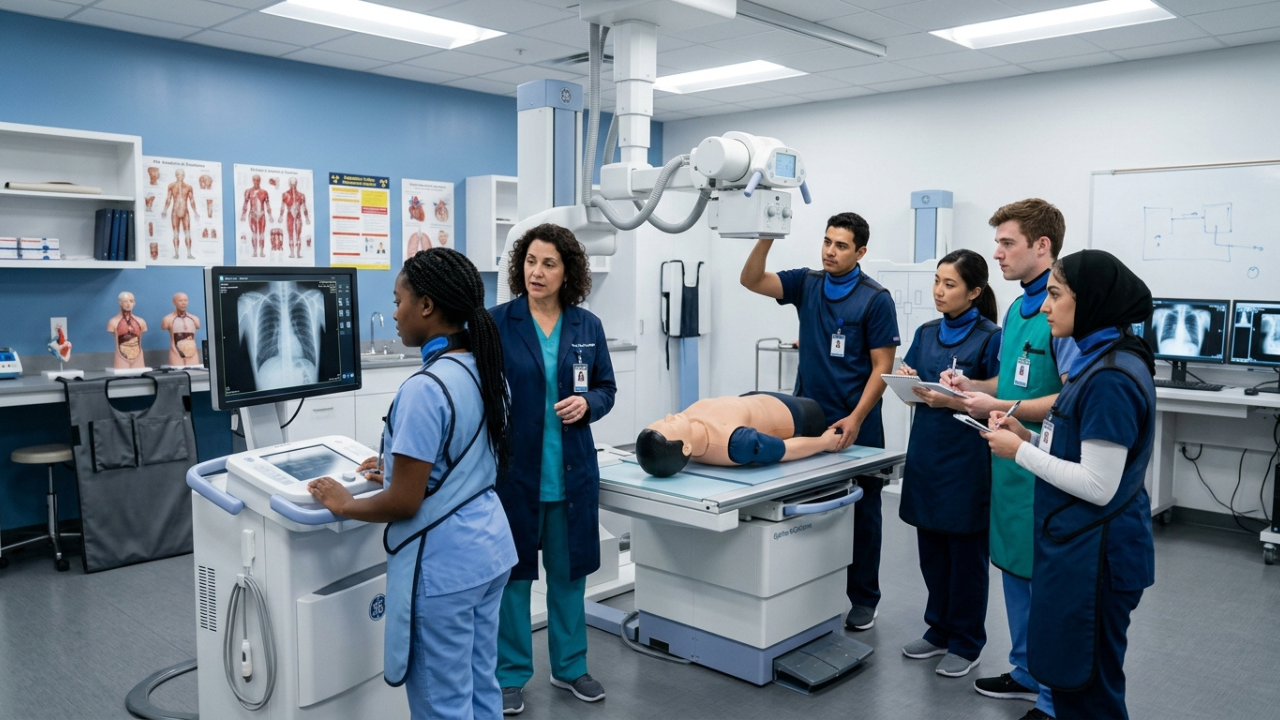
Accredited Program in Radiologic Technology:
Radiologic technology is one of the fastest-growing healthcare professions, offering rewarding career opportunities for individuals who enjoy patient care and advanced medical imaging. Choosing an accredited program in radiologic technology is one of the most important decisions aspiring radiologic technologists can make. Accreditation ensures that a program meets recognized educational standards, prepares students for certification exams, and increases employment opportunities after graduation.
This guide explains everything you need to know about accredited radiologic technology programs, including accreditation standards, admission requirements, curriculum, career prospects, salary expectations, certification, and tips for choosing the best school.
What Is an Accredited Program in Radiologic Technology?
An accredited program in radiologic technology is an educational program that has been evaluated by an independent accrediting organization to ensure it meets established academic and professional standards. Accreditation confirms that students receive quality education, appropriate clinical experience, qualified instructors, and access to modern imaging equipment.
Most accredited programs combine classroom instruction with supervised clinical training, allowing students to gain both theoretical knowledge and practical experience before entering the workforce.
Students learn various aspects of medical imaging, including:
- Human anatomy and physiology
- Radiation physics
- Patient positioning
- Medical ethics
- Radiation protection
- Diagnostic imaging procedures
- Image evaluation
- Clinical patient care
- Medical terminology
Graduating from an accredited program often fulfills eligibility requirements for professional certification examinations and state licensure in many regions.
Why Accreditation Matters
Choosing an accredited institution offers numerous long-term advantages that extend far beyond graduation.
Higher Educational Standards
Accredited institutions follow rigorous educational guidelines. These standards ensure students receive current knowledge aligned with modern healthcare practices.
Better Employment Opportunities
Many hospitals and healthcare employers specifically require applicants to graduate from accredited radiologic technology programs.
Eligibility for Certification
Graduates are generally eligible to take national certification examinations that demonstrate professional competency.
Financial Aid Opportunities
Many accredited colleges qualify for federal or institutional financial aid programs, scholarships, and educational grants.
Easier Credit Transfer
Students who later pursue advanced degrees often find it easier to transfer credits from accredited institutions.
Organizations That Accredit Radiologic Technology Programs
Several organizations evaluate educational quality in radiologic technology. While accreditation systems vary by country, recognized accrediting bodies review curriculum quality, faculty qualifications, clinical education, student outcomes, and institutional resources.
Important accreditation standards generally evaluate:
- Curriculum quality
- Clinical education
- Faculty expertise
- Student support services
- Laboratory facilities
- Program effectiveness
- Graduate success rates
- Continuous quality improvement
Students should always verify that a program maintains current accreditation before enrolling.
Admission Requirements
Admission requirements differ among colleges and universities, but most programs require applicants to satisfy several academic and personal qualifications.
Academic Requirements
Most institutions require:
- High school diploma or equivalent
- Strong grades in biology
- Chemistry
- Mathematics
- English
Some competitive programs also require prerequisite college courses before admission.
Additional Requirements
Applicants may also need:
- Criminal background check
- Health examination
- Immunization records
- CPR certification
- Drug screening
- Personal interview
- Recommendation letters
Meeting minimum admission requirements does not always guarantee acceptance because many accredited programs have limited enrollment.
Curriculum and Clinical Training
An accredited radiologic technology curriculum combines classroom learning with hands-on clinical education. Students gradually develop technical competence while learning patient-centered care.
Core Courses
Common subjects include:
- Anatomy and Physiology
- Radiographic Procedures
- Radiation Biology
- Imaging Equipment
- Radiation Protection
- Medical Ethics
- Patient Care
- Pathology
- Image Production
- Cross-sectional Anatomy
Clinical Experience
Clinical rotations allow students to work under experienced radiologic technologists in real healthcare environments.
Students gain experience performing imaging procedures such as:
- Chest X-rays
- Skeletal imaging
- Trauma radiography
- Mobile imaging
- Fluoroscopy assistance
- Emergency department imaging
Clinical education develops confidence, communication skills, technical precision, and patient safety awareness.
Skills You Will Develop
Success in radiologic technology requires a combination of technical knowledge and interpersonal abilities.
Important professional skills include:
- Excellent communication
- Attention to detail
- Critical thinking
- Compassionate patient care
- Problem-solving
- Time management
- Technical proficiency
- Teamwork
- Adaptability
- Professional ethics
These skills help technologists provide accurate diagnostic images while ensuring patient comfort and safety.
Certification and Licensure
Graduating from an accredited program in radiologic technology is typically the first step toward becoming a licensed radiologic technologist.
After graduation, many students complete a professional certification examination required by employers or licensing authorities.
Certification benefits include:
- Increased employment opportunities
- Higher earning potential
- Professional recognition
- Career advancement
- Continuing education opportunities
Many states or countries also require professional licensure before practicing independently.
Healthcare professionals should maintain certification through continuing education to stay current with evolving imaging technology and safety standards.
Career Opportunities After Graduation
Graduates enjoy diverse employment opportunities across the healthcare industry.
Potential workplaces include:
- Hospitals
- Emergency departments
- Outpatient imaging centers
- Orthopedic clinics
- Cancer treatment centers
- Physician offices
- Urgent care clinics
- Mobile imaging companies
- Government healthcare facilities
- Research institutions
With additional education and certifications, radiologic technologists can specialize in advanced imaging fields.
Popular Specializations
- MRI Technology
- CT Scanning
- Mammography
- Interventional Radiology
- Cardiovascular Imaging
- Bone Densitometry
- Nuclear Medicine
- Radiation Therapy
Specialization often leads to increased responsibilities and higher salaries.
Salary Expectations and Job Outlook
Radiologic technology continues to experience strong demand due to aging populations, expanding healthcare services, and technological advancements.
Factors influencing salary include:
- Geographic location
- Experience
- Education
- Certifications
- Workplace setting
- Specialization
Technologists working in specialized imaging modalities frequently earn higher salaries than entry-level general radiographers.
The profession also offers excellent job stability because diagnostic imaging remains an essential component of modern healthcare.
How to Choose the Best Accredited Program
Selecting the right educational institution requires careful research.
Consider the following factors before applying:
1. Accreditation Status
Always verify current accreditation.
2. Graduation Rate
Higher graduation rates often indicate strong academic support.
3. Certification Pass Rate
Review graduate success on professional certification examinations.
4. Clinical Partnerships
Strong healthcare partnerships provide excellent hands-on experience.
5. Faculty Qualifications
Experienced instructors improve educational quality.
6. Modern Equipment
Training with updated imaging technology better prepares students for employment.
7. Tuition Costs
Compare tuition alongside available scholarships and financial aid.
8. Job Placement Support
Career services can help graduates secure employment quickly.
Real-World Example
Imagine two students graduating from different radiologic technology programs.
Student A graduates from an accredited institution with extensive clinical experience and excellent certification preparation. Shortly after graduation, they pass their certification exam and receive multiple job offers from hospitals.
Student B graduates from a non-accredited program. Unfortunately, many employers require graduates from accredited institutions, limiting employment opportunities. Student B may also face challenges qualifying for certification examinations or state licensure.
This example demonstrates why selecting an accredited program in radiologic technology is a critical investment in your future career.
Tips for Success During Your Program
Students who perform well usually develop strong study habits and professional attitudes.
Helpful tips include:
- Attend every lecture and laboratory session.
- Practice patient communication skills.
- Take clinical rotations seriously.
- Ask experienced technologists questions.
- Review anatomy regularly.
- Stay organized with coursework.
- Follow radiation safety procedures carefully.
- Participate in professional organizations.
- Build relationships with instructors.
- Continue learning after graduation.
Developing these habits early contributes to long-term professional success.
Conclusion
Choosing an accredited program in radiologic technology is one of the smartest decisions for anyone pursuing a career in medical imaging. Accreditation ensures high educational standards, quality clinical training, and improved eligibility for certification and employment. Graduates gain the knowledge, technical expertise, and professional skills necessary to provide safe, accurate diagnostic imaging while delivering compassionate patient care.
As healthcare continues to expand, skilled radiologic technologists remain in high demand across hospitals, imaging centers, clinics, and specialized medical facilities. By carefully researching accredited programs, comparing curriculum quality, evaluating clinical partnerships, and preparing for certification, students can build a rewarding and stable career in this essential healthcare profession.
Frequently Asked Questions (FAQs)
1. What is an accredited program in radiologic technology?
An accredited program is a radiologic technology education program that meets recognized academic and clinical standards established by an approved accrediting organization.
2. Why is accreditation important?
Accreditation improves educational quality, increases employment opportunities, supports certification eligibility, and assures employers that graduates have received proper training.
3. How long does a radiologic technology program take?
Most accredited programs require approximately two years for an associate degree, although bachelor’s degree programs generally take four years.
4. Can I specialize after graduation?
Yes. After gaining experience and additional certification, radiologic technologists may specialize in MRI, CT, mammography, interventional radiology, or other advanced imaging fields.
5. Is radiologic technology a good career?
Yes. Radiologic technology offers competitive salaries, strong job demand, career advancement opportunities, and the chance to make a meaningful impact on patient care.
Read More: